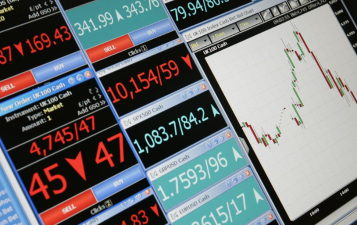
Market uncertainty often causes confusion, especially in a volatile and information-saturated economic environment, making maintaining confidence crucial. Whether you're an investor, business owner, or ordinary consumer, facing market fluctuations requires everyone to remain calm, avoid being swayed by emotions, and make rational judgments. It's essential to recognize that market uncertainty is the norm, not an accident. Markets are influenced by various factors, including policy changes, international situations, technological advancements, and shifts in consumption habits. These factors often intertwine, increasing the difficulty of prediction. Therefore, in the face of volatility, we must adjust our expectations of "stability" and not expect the market to operate smoothly forever. Accepting volatility allows for more rational preparation of contingency plans and avoids being overwhelmed by short-term fluctuations.
What is the difference between signals and noise?
In market intelligence gathering, signals and noise are often difficult to distinguish. Signals refer to key information that predicts future market trends, while noise refers to information that has no substantial impact on business decisions or even interferes with them. However, this line is not always clear, especially when facing unprecedented changes. Many companies make two common mistakes:
- Over-reliance on a single signal: Overemphasizing certain information and assigning excessive weight to specific sources often occurs in information cocoons. For example, seeing a government stimulus policy or a trend prediction from a financial influencer on a short video platform might lead to a hasty investment of resources into a particular market, only to be quickly exploited.
- Ignoring potential early signals: Companies sometimes overlook signals that are too weak, but these signals may indicate the beginning of significant trends. For example, discussions on new technologies or user pain points at a technology forum may not attract attention initially, but if relevant and persistent weak signals can be captured, companies may be able to foresee future technological trends.
How to determine what constitutes a true "signal"?
True market "signals" typically possess the following characteristics, which companies need to pay close attention to during intelligence gathering and analysis:
Persistence: Short-lived fluctuations do not necessarily indicate a trend
Many pieces of information in the market are short-lived fluctuations and one-off events, which do not necessarily represent a trend. Businesses need to identify signals with persistent and cumulative effects, and this sensitivity requires consistent, day-to-day cultivation.
By consistently and regularly scanning fixed information sources—much like a journalist's daily, unwavering "topic scanning"—businesses can quickly capture subtle changes or new trends, becoming aware of new things and phenomena as they emerge, and observing which topics recur across different channels, thus distinguishing between fleeting hot topics and the beginnings of genuine trends.
Multi-Source Validation: Information from a Single Source is Prone to Distortion
A genuine market signal usually doesn't originate from just one specific information source. If businesses rely solely on information from a single source or assign excessive weight to certain sources, they risk distortion.
Effective intelligence analysis should involve cross-validation from multiple independent information sources. This effectively reduces the risk of information bias and improves the reliability of judgments. The multi-source validation process requires businesses to pay attention not only to news reports, policy releases, and industry dynamics, but also to opinion leaders, academic papers, and upstream and downstream participants, among other information channels. If a phenomenon or issue is supported by several different and independent sources, its likelihood of being a "signal" increases significantly. This verification process not only helps companies filter out truly important information but also allows them to further understand the driving factors behind trends.
Logical Connections: Potential Links Between Seemingly Unrelated Information
Market signals are not always directly manifested through a single event but are often hidden within multiple seemingly unrelated pieces of information. Companies need to be able to find potential logical connections between seemingly unrelated information to predict possible market changes. This correlation analysis requires a deep understanding of one's own field and the ability to discover deep patterns or structural problems.
Building Confidence in One's Own Abilities and Judgments
Systematic Learning
Master basic economic and market knowledge, such as the basic operating mechanisms of the macroeconomy, the logic of changes in the industrial chain, and understand industry dynamics and company fundamentals, rather than making decisions easily based on news headlines or social media sentiment. Knowledge accumulation does not take time; it can be deepened gradually through reading professional books and paying attention to authoritative information sources.
Data-Driven Analysis
When facing market data, avoid being misled by a single indicator; instead, analyze information from multiple angles and dimensions. For example, if you see a short-term slowdown in an industry, consider the underlying reasons: is it a cyclical adjustment or a structural change? Are there potential opportunities? Reduce emotional judgments by rationally comparing historical data or peer situations.
Risk Management Awareness
Confidence is not the same as blind optimism, but rather understanding potential risks and rationally allocating assets and resources. For example, in investing, you can diversify risk through asset allocation and set stop-loss points to protect against unexpected fluctuations. In business decision-making, contingency plans should also be developed to avoid significant losses due to a single solution. Being prepared enhances your confidence in facing the unknown.
Focus on Long-Term Trends
Short-term market fluctuations are inevitable, but history shows that economic and technological progress generally trendes upward. In other words, if you choose the right direction, patient holding often yields returns. For example, areas such as technological innovation, consumption upgrades, and emerging industries, although experiencing ups and downs, remain important development opportunities in the context of global economic transformation. Taking a long-term view and reducing anxiety about short-term fluctuations helps maintain a positive mindset.
Conclusion
In summary, the current market environment is fraught with uncertainty, but it also presents significant investment opportunities. Investors who deeply understand macroeconomic changes, choose suitable industries, and flexibly respond to market sentiment fluctuations can find suitable investment opportunities in a complex and ever-changing market. Meanwhile, sound risk management and a diversified portfolio are key to achieving long-term stable returns in an uncertain market. Whether in traditional assets or emerging sectors, investors need to remain rational and avoid blindly following trends to remain successful in this complex market.